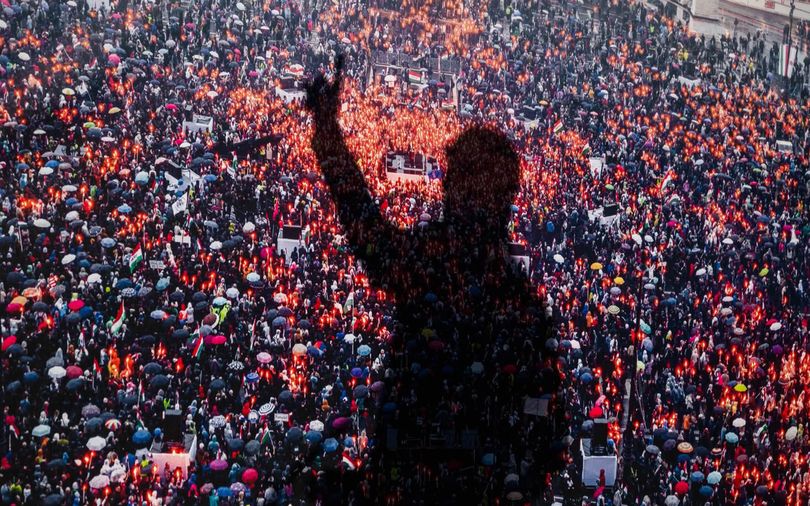

Mr Koszeg said: "It would be wrong to claim that police attacked peaceful protesters and employed violence without any reason." The police had been more professional in their approach than they had been during the siege of the television headquarters and the days that followed. The Hungarian Helsinki Committee believed the police had moved against rioters in a broadly legal fashion, although there were some reports of the police overreacting. He said that the police tactic of tiring out the crowd by making protesters wait for hours before making a move was effective.
He continued, saying that it was clearly wrong to fire rubber bullets at the head, but that it was still unclear whether this had happened by accident or not. If the head shots had been accidental, then a court could establish whether compensation was due. Otherwise, the police officer concerned could be convicted in a criminal court.
The constitutional lawyer Istvan Szikinger agreed that their was a lack of civil oversight over the police. Police statements asserting that the law obliged the police to intervene yesterday and that the measures employed were all within the law were unacceptable, he said. Only an inquiry could confirm that this was indeed the case and whether the measures adopted were proportionate. Szikinger said rubber bullets could only be used against a crowd in extreme circumstances - it was possible, he claimed, that water cannon would have been sufficient on its own. It was also unfortunate that violent police action had combined several very different crowds into one. "Whatever happens, it is more than possible that there will not be a full examination of the police actions, and that is the most serious problem," Szikinger said.
The constitutional lawyer, who is a well-known critic of the forces of law and order, said the police were to blame for the way yesterday's commemoration had developed into a full-blown riot. He said the dispersal of the Kossuth ter demonstration had poured oil on the fire. "The Police Law does not give police the right to act in such circumstances, and they should not have done so," Szikinger argued. He said the police have a responsibility both to the law and to society.
Everything that had happened since the leaking of Ferenc Gyurcsany's speech should be examined in a full inquiry that would encompass the siege of the television headquarters and the 23 October riots. The first mistake police made was in not dispersing the illegal demonstration that started on 17 September. They had compounded this mistake by acknowledging the Kossuth ter demonstrations as electoral campaign events and then misleading people by authorising a demonstration on Kossuth ter on 23 October before then forcing the demonstrators off the square.
He told hvg.hu that bystanders were obliged to leave a public space once police had announced they were going to intervene. Police were entitled to take measures against anyone who disobeyed this order, he said. It was impossible for police to establish the precise role of everybody in the crowd, he said. However, the police could not order bystanders to retreat a certain distance. Thus, people attempting to escape the area by passing through the police line are entitled to do so, and officers must make this possible.